
FDM vs. SLA
Craftcloud® offers a variety of 3D printing technologies, with Fused Deposition Modeling (FDM) and Stereolithography (SLA) among the most popular. Do you know which one’s best for your project?
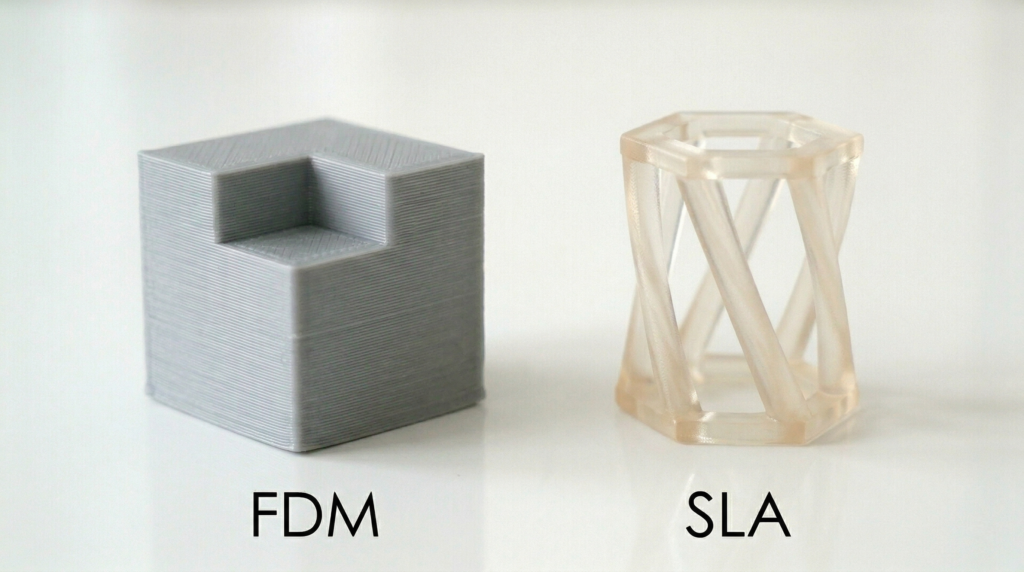
The Technologies in a Nutshell
FDM is an additive manufacturing process that builds objects by extruding melted filament. The machine deposits this material layer-by-layer onto a build platform, where it quickly solidifies and fuses with the previous layer. Because of the process, temporary support structures might be required to hold up overhanging features. This technology is valued for its cost-effectiveness, wide material range (especially when it comes to colors and finishes that don’t necessarily require post-processing), and durability.
SLA is a resin-based 3D printing technology that uses a high-power ultraviolet (UV) laser to cure liquid photopolymer into solid plastic. SLA is renowned for producing parts with an incredibly smooth surface finish and intricate details that are often invisible to the naked eye. While it typically requires more post-processing, such as washing and UV curing, it remains the preferred choice for high-precision applications like jewelry, dental models, and miniature figurines.
FDM’s wider variety of aesthetic and composite materials make it a strong choice for many projects, but SLA could be the superior option for models that require optical transparency or high-resolution details that FDM can’t resolve.
Best Use Cases
FDM might be the most adequate choice if you’re working on:
- Rapid concept prototyping
- Custom jigs and fixtures
- Durable replacement parts
SLA would be the better option for:
- High-detail miniatures
- Jewelry, dental and medical models
- Complex translucent parts
Do you want to know how much your model will cost depending on technology and material chosen? Upload it and in a few clicks, have your answer so you can make an informed decision.